NEUROSCIENCE OF EMPATHY AND COMMUNICATION: How to Better Understand Others


🧠 Neuroscience of Empathy and Communication: How to better understand others
Empathy and communication are two fundamental pillars of human life. At work, in personal relationships, or even in the way we learn, the ability to understand and to be understood makes all the difference. But what does neuroscience have to do with this? More than we imagine.
Brain science shows that both empathy and communication are not just “social skills,” but functions deeply rooted in our nervous system. Understanding how they work helps transform the way we relate to each other and strengthen more genuine connections.
🧪 The brain of empathy
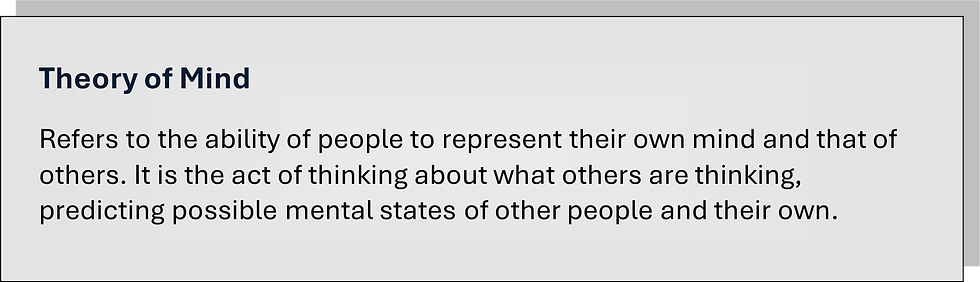
When we talk about empathy, we are talking about a neural circuit that allows us to feel what others feel and interpret their intentions. The medial prefrontal cortex is a key piece in this process, helping to decipher other people’s thoughts and perspectives — what scientists call Theory of Mind.
The amygdala, in turn, processes emotional expressions and threat signals, while the famous mirror neurons allow us to “reflect” the experience of others. This is why yawns are contagious or why we feel discomfort when we see someone get hurt.

There is also oxytocin, known as the trust hormone, which strengthens social bonds and increases our willingness to cooperate.
📌 Practical example: when a leader demonstrates genuine empathy, this activates reward areas in the brain of their team, increasing motivation and engagement.
👉 Recommended reading: Social: Why Our Brains Are Wired to Connect, by Matthew Lieberman.
💬 The brain of communication
Communicating is not just about talking: it is about connecting brains. Broca’s and Wernicke’s areas are responsible for the production and comprehension of language, but effective communication goes beyond words. Broca’s area is related to language expression, while Wernicke’s area deals with perception and understanding of language.

When we add emotion to a message, the amygdala comes into play, reinforcing memory by working together with the hippocampus. In this case, the amygdala participates in the cognitive process by processing the emotional meaning of external stimuli so that the information reaches the hippocampus, highlighting the memory of the event with emotional content. This is why emotionally charged stories are much easier to remember than loose data.
Studies with hyperscanning — a technique that measures the brain activity of two people at the same time — show that, in engaging conversations where there is mutual collaboration, there is neural synchrony: the brains literally get in sync. (Neural synchrony is the theme of my master’s thesis, and I will discuss the results here another day.)
📌 Practical example: a presentation that mixes data with personal stories and images reaches not only logic but also emotion, generating greater impact.
👉 Recommended reading: Study on neural synchrony in communication.
🧠 Communication capacity

Despite being an impressive machine, the human brain has a limited processing capacity; it cannot process everything that happens at the same time with maximum efficiency.
The main aspects of this limitation occur due to:
1. Attention is limited: you can only focus on a restricted number of stimuli at a time (which explains why multitasking reduces performance).
2. Processing speed has limits: the brain processes sensory information quickly, but there are physical and biochemical limits to the speed at which neurons fire.
3. Working memory capacity is restricted: this is a small mental space manipulated in real-time, which is therefore limited.
4. Mental fatigue exists: cognitively demanding activities cause brain fatigue, and prolonged effort can reduce performance.
5. Information filtering: the brain automatically filters most of the millions of stimuli it receives through selective attention so that the individual does not collapse with the excess of data.
6. Cognitive illusions and biases: the brain uses shortcuts (heuristics) to deal with the world and reduce processing time. But this can lead to errors in judgment and cognitive bias.
There are many ways to convey an idea, information, or vision, and therefore communication must be assertive, clear, and objective, favoring mutual understanding between sender and receiver.
The same narrative can generate different perceptions and impacts on receivers. Each individual adapts the narrative according to their reality and experiences; therefore, the sender must pay attention to their audience, as well as how to attract and retain their attention. EACH PERSON IS CAPABLE OF GENERATING A DIFFERENT EXPERIENCE FROM THE SAME NARRATIVE.

🤝 Applications in everyday life

Empathy and communication have practical effects in all contexts:
At work: practicing active listening in meetings reduces conflicts and improves collaboration.
In education: empathetic teachers create more effective learning environments.
In personal life: validating emotions and observing non-verbal signals (such as tone of voice and expressions) helps to avoid misunderstandings.
📌 Practical example: using phrases like “If I understand correctly, you are feeling…” activates brain areas associated with social recognition, reinforcing in the other the feeling of being understood.
👉 Recommended reading: The Moral Molecule, by Paul Zak.
🌟 Conclusion

Empathy and communication are not mysterious gifts — they are brain processes that can be cultivated. The more we understand how the brain builds these connections, the better prepared we are to strengthen relationships of trust, collaboration, and positive impact.
After all, understanding others is, above all, a way of better understanding ourselves.


Comentários