*Year-End Special* NEUROSCIENCE OF HUMAN CONNECTION: Why Christmas and Year-End Holidays Bring Us Closer


🧠✨ NEUROSCIENCE OF HUMAN CONNECTION
Every end of the year it’s the same thing: we are exhausted, drained, needing to take time for ourselves. There is that tightness in the chest that only a parent’s hug could solve. Something inside us shifts – a mix of nostalgia with last-minute rush, old memories with unfinished tasks.
We feel this affection, this longing to see people again, even the family conflicts, this almost magnetic pull that doesn’t show up at any other time of the year.
Of course this has to do with the end of the year, but… this is not just tradition, not just culture — this is also your brain!
Year-end holidays activate some of the deepest and oldest circuits of our social biology, reigniting memories, bonds, emotions, rewards, and the feeling of belonging. Our brain was literally shaped to connect, remember, share, and build and rebuild bonds — and what is happening here is the brain responding to one of the most fundamental impulses of human existence: connection.
🕰️ Nostalgia – When Affective Memory Becomes Comfort

That smell of your grandmother’s food, the festive music from childhood, the decoration that evokes old memories… oh, the longing!! And why does this hit us so deeply?
The truth is that nostalgia is a good kind of longing, isn’t it? It is an extremely sophisticated neuro-affective process involving three main brain structures:
– Default Mode Network (DMN)
The DMN is activated when you are not focused on tasks, when your mind is wandering. And at the end of the year, this network works intensely with:
Autobiographical memories: reliving and deeply recalling the past
Temporal projection: imagining upcoming gatherings and traditions
Narrative construction: creating stories about yourself and others
Studies by Wildschut et al. (2006) show that the DMN is especially active during nostalgic experiences because it connects past, present and future into a coherent narrative.
– Hippocampus
A special and essential area for memory. The hippocampus is fundamental for the formation and retrieval of episodic memories (those linked to specific events).
Retrieval of rich memories: previous holidays, people, places, sensations
Contextual memory: the where and when of past experiences
Consolidation of new memories: recording present events so they can be accessed in the future
Context-dependent memory explains why certain smells, sounds and images have such a powerful ability to transport us through time (Tulving, 2002).
– Amygdala
Responsible for processing the emotional charge of memories, the amygdala makes nostalgia not just a recollection, but an intense emotional experience.
Loaded memories: recollections become stronger (sad or joyful)
Affective response: “this matters,” that familiar ache in the chest
Connection with reward: positive memories activate pleasure circuits
Research shows that memories with strong emotional content are more vividly recalled and have greater impact on present well-being (LaBar & Cabeza, 2006).
In short, nostalgia is not just passive longing — it is a deeply emotional experience.
A study by Routledge et al. (2013) showed that nostalgia increases the perception of social support and reduces feelings of isolation, being particularly powerful in transition periods — such as the end of the year.
And it has important adaptive functions:
Strengthens personal identity (e.g., I am part of something bigger)
Increases ego and meaning (e.g., my life has purpose and continuity)
Reduces loneliness by connecting you to people, even if absent
Improves mood by activating reward systems
🤝 The Biological Need to Belong

The end of the year activates the same circuits that shaped our survival as a species. And it is no exaggeration to say that the human brain was literally engineered for social connection.
Yes — as I’ve explained in previous posts, we are ultrasocial beings, and our survival as a species happened because of that. And unsurprisingly, our brain developed specific circuits to process and seek belonging.
We have the Social Reward System, which is activated during cooperative interactions and moments of genuine connection — just like in the end-of-year festivities — and it activates the same brain regions stimulated when receiving a primary reward (food, sex) (Rilling et al., 2002).
What happens then is that the Social Reward System triggers the release of:
Oxytocin – which increases trust and empathy, prosocial behaviours, and reduces stress and anxiety by inhibiting cortisol, strengthening emotional bonds.
A study by Kosfeld et al. (2005) demonstrated that oxytocin increases generosity and trust, which explains why people become more open and affectionate during this time.
Dopamine – the simple act of sharing meals, gifts, and creating special moments activates the dopaminergic circuit through:
anticipatory pleasure (planning the gathering)
consummatory pleasure (the gathering itself)
altruistic pleasure (for some, giving is more satisfying than receiving)
Research by Moll et al. (2006) shows that generous acts activate reward systems more intensely than personal gains, especially in meaningful social contexts.
Not to mention that the medial prefrontal cortex and the posterior cingulate cortex, which process the dimension of “us vs. them”, expand the “us” during the holidays — generating feelings of unity and belonging.
❤️ Impact on Mental and Physical Health

Human connection is one of the strongest neurobiological protective factors ever studied.In fact, connection is not a luxury — it is a physiological need, comparable to food, water, and sleep.
Research data is astonishing:
Meta-analysis by Holt-Lunstad et al. (2010)
The lack of social connection increases mortality risk by 50%, comparable to smoking 15 cigarettes a day, alcoholism, and obesity.
Harvard Study of Adult Development (80+ years)
The number one factor for happiness and longevity in older adults is the quality of relationships.Not quantity — quality.
🧬 In the immune system:
Increased immune function (more NK cells)
Lower systemic inflammation
Better vaccine responses
❤️🔥 In the cardiovascular system:
Lower blood pressure
Lower resting heart rate
Reduced risk of vascular and heart diseases
⚖️ In the neuroendocrine system:
Lower cortisol (stress hormone)
Higher oxytocin (well-being hormone)
Better regulation of the HPA axis
🧠 And in the brain? So many benefits. But here are the three main ones:
Increased neuroplasticity
Reduced risk of cognitive decline (“losing sharpness”)
Protection against several diseases, especially dementia
🧩 And for mental health overall:
50% reduction in risk of depression
Reduction in anxiety and stress
Increase in psychological resilience
Boost in self-esteem and sense of purpose
But understand this: given all this science, the greatest gift you can give (and receive) during the year-end holidays is your genuine, physical presence. Not expensive gifts. Not perfect celebrations. But you.
🎄 Conclusion: The Science Behind the Magic
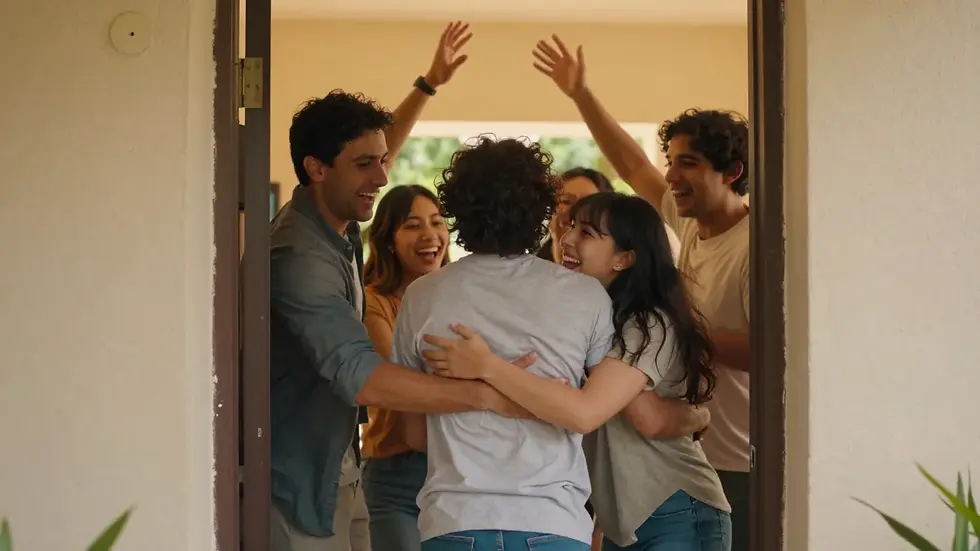
Christmas and the end-of-year holidays are not magical by chance. They activate the most fundamental circuits of the human brain:
✨ Nostalgia connects us with our history and identity
✨ Belonging satisfies a deep biological need
✨ Empathy allows us to feel with others
✨ Gratitude transforms our brain chemistry
✨ Connection keeps us alive, healthy, and happy
Understanding this neurobiology doesn’t remove the magic — it amplifies it.
Because now you know that that desire to be together, that ache in the chest when remembering, that warm feeling of belonging… it’s not just sentimentality.
It is your brain working exactly as it should.
So, this Christmas, allow yourself to:
Feel nostalgia (it’s good for you)
Seek connection (your brain needs it)
Express gratitude (it changes your neurochemistry)
Be present (it is the best gift)
Merry Christmas!🎄Happy Holidays!✨
And may your brain be celebrating too! 🧠❤️


Comentários